
The silent drain on your business isn’t a lack of revenue—it’s what’s quietly feeding on it.
They Don’t Announce Themselves
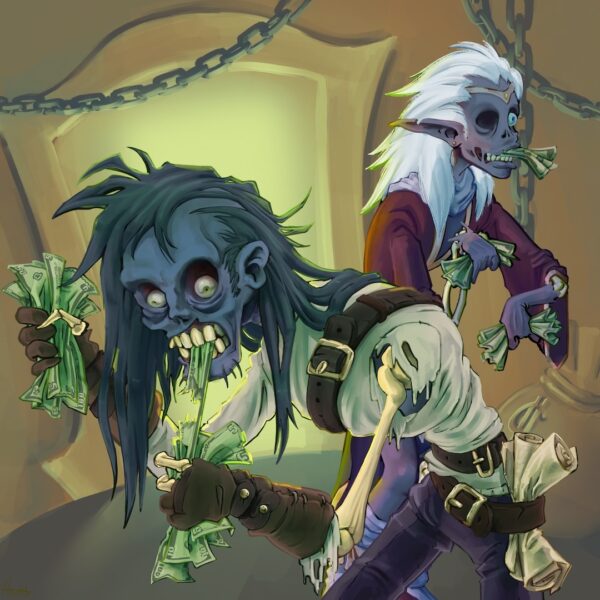
No one notices the Cash Zombies at first. They don’t show up on your dashboard. They don’t trigger an alert. They don’t cause an immediate crisis.
They wander quietly through your business—feeding.
A few unused software licenses here. An underutilized system there. A piece of equipment that was supposed to drive growth but never did.
Individually, none of it feels urgent.
But like any good zombie story—from The Walking Dead to World War Z—the real danger isn’t the first one you see. It’s the ones you don’t.
Because by the time you notice them, they’ve already multiplied.
The Illusion: “We’re Growing, So We’re Fine”
In scaling companies, growth creates a dangerous illusion:
If revenue is increasing, everything must be working.
Headcount expands. New tools are layered in. Budgets grow alongside demand. From the outside, it looks like progress. Inside, something else is happening.
Costs begin to accumulate—not because they’re strategic, but because they already exist. And over time, spending drifts further and further away from value.
This is how the Cash Zombies spread.
Not through a single bad decision—but through unquestioned ones.
How the Cash Zombies Spread
The Cash Zombies don’t attack all at once. They feed slowly, through patterns that feel normal in a growing company:
- Software stacks expand, but usage doesn’t
- Vendors are added, but rarely revisited
- Capital investments are made, but not re-evaluated
- Roles are filled, but not always aligned with current priorities
Each one seems small. But like any outbreak, one zombie rarely stays alone.
Without discipline, one unnecessary expense leads to another. One layer of complexity leads to more.
And before long, your cost structure is no longer built on strategy—it’s built on history.
The Most Dangerous Zombies: They Could Be On Your Payroll
Not all Cash Zombies live in your expense report or your accounts payable. Some sit inside your organization, on the payroll. These are the most dangerous ones.
Employees who are no longer aligned with the company’s direction. Roles that once made sense, but no longer create value. Team members whose behavior slows execution—or worse, spreads negativity.
Left unaddressed, they do more than drain payroll. They create drag. They distort priorities. And in the worst cases, they turn other employees into zombies—disengaged, misaligned, or operating without ownership.
Like any good outbreak story, the risk isn’t just individual impact. It’s contagion.
Why the Cash Zombies Multiply as You Scale
Early-stage companies are forced to operate with discipline. Every dollar matters. Every decision is visible. Waste is obvious—and corrected quickly. But as companies grow, that discipline often fades.
Budgets are built on last year’s numbers. Expenses are rolled forward with incremental increases. Decision-making becomes distributed, and accountability becomes less clear.
Financial review shifts to high-level summaries—monthly or quarterly reports that show what happened, but not why.
And that’s exactly where the Cash Zombies thrive. In the gaps between:
- Visibility and detail
- Spending and accountability
- Strategy and execution
The Real Cost: Profitability, Flexibility, and Survival
The Cash Zombies don’t just reduce margins. They erode your ability to scale. Profitability is what fuels growth. It funds new initiatives. It creates optionality. It’s also what allows a business to weather the inevitable storm. And there is always a storm.
Market shifts. Capital constraints. Customer churn. Economic pressure.
Companies that operate with hidden inefficiencies often discover—too late—that their growth was masking fragility. Because when cash is quietly leaking out of the business, you don’t have the reserves—or the flexibility—to respond.
The Cash Zombies don’t just consume your profits. They consume your resilience.
The Defense: Stop Feeding the Zombies
You don’t defeat the Cash Zombies with cost-cutting alone. You defeat them by removing what feeds them in the first place. That starts with visibility and discipline.
1. Zero-Based Budgeting (ZBB)
Instead of rolling budgets forward, rebuild them from zero. Every expense must answer a simple question:
“Would we choose to spend this again today?”
If the answer isn’t clear, it shouldn’t be assumed.
2. Reconnect Spending to Strategy
Every dollar should be tied to a defined objective. Not history. Not precedent. Not “because we’ve always done it.” If you can’t explain how an expense supports your strategy, it’s likely feeding the zombie.
3. Increase Financial Visibility
High-level reports aren’t enough. You need:
- Line-item visibility
- Usage-based evaluation
- Ongoing variance analysis
Because by the time inefficiencies show up at the top line, the Cash Zombies have already taken hold.
4. Organizations must establish consistent processes—and expectations—that ensure financial data is regularly reviewed and acted upon.
- Rolling cash forecasts,
- Detailed variance analysis,
- Structured approval processes for new spending.
Advances in financial tools have made it easier to track expenses in real time and analyze performance at a more granular level.
But tools alone are not enough……..
5. Create Culture of Ownership Across the Business
Financial discipline isn’t just a finance function. Leaders across the organization must understand:
- How their decisions impact cash
- What “good” spending looks like
- Where inefficiencies hide
When accountability is distributed, problems are identified earlier—before the Cash Zombies spread.
The Reality Check
Most companies don’t have a revenue problem. They have a cash discipline problem. Growth can hide it—for a while. But eventually, every organization faces the same question:
Is our spending actually driving value? Or is something quietly feeding on our margins?
Meet the Cash Zombies
If growth isn’t translating to profitability…
If costs keep rising without clear return…
If your organization feels heavier as it scales…
You may already have an outbreak.
We call this an invasion of the Cash Zombies.
And until you identify and eliminate them, they will continue to consume the very thing your growth depends on, cash.
Meet the Cash Zombies and download the Defense Pack
FAQ
What are the Cash Zombies in business?
The Cash Zombies represent hidden and recurring costs that drain cash from a business without delivering value. These include unused software, underutilized assets, and misaligned roles that persist as companies grow without proper financial oversight.
Why do growing companies lose profitability?
Growing companies often lose profitability due to cost drift—expenses that accumulate without being tied to strategic outcomes. As organizations scale, financial visibility and accountability weaken, allowing inefficiencies to multiply.
How does profitability impact scaling?
Profitability provides the capital needed to reinvest in growth, fund new initiatives, and navigate economic downturns. Without strong profitability, companies have limited flexibility and are more vulnerable to disruption.
How can businesses eliminate unnecessary costs?
Businesses can eliminate unnecessary costs by implementing zero-based budgeting, increasing financial visibility, and ensuring every expense aligns with strategic goals. Regular review and accountability help prevent inefficiencies from becoming embedded.