
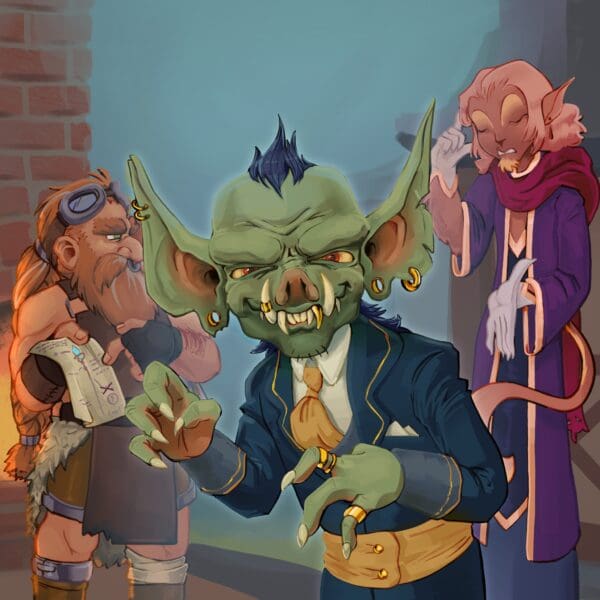
In the dark corners of many growing companies lurks a subtle but dangerous creature: the Expectations Goblin.
Unlike other monsters that attack with obvious chaos, the Expectations Goblin works quietly in the background, eroding trust between leaders and teams. Download the Myth Monster Card here. He whispers assumptions into conversations, hides inside vague plans, and plants invisible agreements that no one actually made—particularly around money.
At first, everything seems fine. The team meets. The meeting ends. Work begins.
But the goblin has already done its work. Someone assumes a service line will reliably generate the projected revenue. Someone believes a strong P&L statement means healthy cash flow. Someone thinks the budget for that new hire or marketing push was implicitly approved.
Yet none of it was explicitly agreed upon.
Weeks later, frustration erupts among leaders.
“I thought we were aligned on revenue targets.”
“Wasn’t the cash flow supposed to support this?”
“I assumed our profitable P&L meant we had the liquidity.”
By the time these phrases appear, the Expectations Goblin has already built his masterpiece—often with serious financial consequences.
As the saying goes: “Expectations are resentments under construction.”
And in finance, this goblin is the master architect of cash crunches, missed forecasts, and eroded stakeholder confidence.
Where the Expectations Goblin Hides Inside Growing Companies—Especially in Finance
The Expectations Goblin rarely appears in obvious ways. He hides in everyday leadership interactions where financial assumptions replace clarity.
He thrives in places like:
- Strategy meetings where revenue projections from service lines or products are discussed but never confirmed in detail
- Financial reviews where “strong P&L” is celebrated without examining actual cash flow timing and working capital needs
- Leadership conversations that end with “I think we’re aligned on the budget”
- Informal decisions about hiring, marketing spend, or product launches that assume funding will be available
- Forecasts that assume certain service lines will scale predictably without validating underlying drivers
In scaling companies, teams move quickly. Revenue targets are set. P&Ls look healthy on paper. Everyone assumes the financial picture is clear and consistent.
But when expectations around money remain unspoken, every leader fills in the gaps differently. Sales assumes the new service line will close deals at the projected margin. Finance sees a profitable P&L and assumes cash will be there when bills come due. Operations plans headcount growth believing the revenue will materialize on schedule.
That’s exactly where the Expectations Goblin lives. He thrives in financial ambiguity, not deception—especially when teams rush past clarification on revenue recognition, cash conversion, or funding commitments.
His favorite weapon is still the phrase: “We’re aligned.” But alignment without explicit financial agreement is simply dangerous assumption wearing a suit.
How Unspoken Financial Assumptions Create Leadership (and Cash) Friction
Unspoken expectations rarely cause problems immediately—especially in finance.
At first, teams move forward confidently, believing the revenue pipeline is solid and the P&L tells the full story.
But over time, assumptions diverge dangerously:
- Sales interprets the service line revenue target one way (perhaps counting signed contracts).
- Finance interprets the same target differently (focusing on collected cash and timing).
- Leadership assumes a “strong P&L” automatically means strong cash flow, ignoring delays in receivables, inventory build-up, or upfront investments.
Weeks later, leaders discover they were solving different problems all along. Revenue forecasts miss. Cash gets tight despite reported profits. Bills pile up while payments lag.
Deadlines for vendor payments slip. Growth initiatives get stalled. Frustration grows into panic.
And because no one can point to the moment where financial expectations were clearly defined and agreed, the result is often finger-pointing rather than solutions—sometimes leading to emergency funding requests, damaged vendor relationships, or even covenant breaches.
That is how the Expectations Goblin turns financial momentum into costly friction.
The Leadership Discipline That Forces the Goblin Into the Open
The Expectations Goblin survives on financial ambiguity.
The moment expectations around revenue, cash flow, budgets, and profitability are made explicit, his power disappears.
That’s why strong leadership teams rely on a simple but powerful discipline: Confirming and agreeing financial expectations before moving forward.
Instead of assuming alignment on the numbers, leaders pause to verify it. They ask questions like:
- What exactly are we committing to in terms of revenue from each service line or product?
- Who owns the outcome, including collection and cash conversion?
- What does success look like in both P&L and cash flow terms?
- When will this revenue be recognized and, more importantly, when will the cash actually hit the bank?
- How will we measure progress—on bookings, billings, or actual cash collections?
These questions may feel simple, but they transform dangerous financial assumptions into clear agreements.
The Level10 CFO Defense
The only way to defeat the Expectations Goblin in the financial realm is with two powerful tools that bring assumptions into the open and replace them with clarity:
Crucial Conversations and the Entrepreneurial Operating System (EOS)
Crucial Conversations create the environment where difficult but necessary financial discussions happen openly. Hidden assumptions about revenue generation, P&L vs. cash flow, and funding availability are surfaced and replaced with explicit commitments. This is especially critical in two high-stakes areas: budgeting and forecasting. Without explicit conversations, budgeting becomes a collection of hopeful guesses, and forecasting turns into a game of mismatched expectations that can quickly lead to cash surprises.
At Level10 CFO, we facilitate these Crucial Conversations and manage budgeting and forecasting processes across the entire business for our clients. We ensure that assumptions are surfaced, challenged, and converted into aligned, documented commitments—creating consistent visibility from the leadership team down through every department.
EOS then provides the structure that keeps that financial clarity consistent across the organization.
The six components of the EOS model ensure alignment and agreement, especially around the numbers:
- Vision – Everyone understands the financial direction, revenue targets, and cash priorities.
- People – The right people are in the right roles with clear financial accountability.
- Data – Objective metrics (KPIs on revenue, gross margin, cash flow, and working capital) replace assumptions and opinions.
- Issues – Financial problems are surfaced and solved instead of ignored until cash runs short.
- Process – The organization operates from documented and agreed financial systems and forecasting processes.
- Traction – Teams execute with clear financial accountability and measurable cash results.
At Level10 CFO, we apply these disciplines universally. Ruthless clarity in budgeting, laser-focused financial KPIs (distinguishing P&L profitability from actual cash health), and purposeful, accountable meetings are just a few examples of how we bring rigor and impact to every engagement—especially when it comes to preventing financial surprises.
Together, these disciplines remove the ambiguity where the Expectations Goblin thrives in finance.
Instead of operating from assumptions about revenue, profitability, or liquidity, leadership teams operate from shared visibility, documented financial commitments, and measurable cash outcomes.
Banishing the Goblin
Healthy organizations and powerful leaders do not rely on assumed financial alignment. They build it deliberately—especially around the numbers that matter most.
When leadership encourages direct dialogue, documented financial expectations, and transparent metrics that separate P&L strength from true cash flow reality, the Expectations Goblin has nowhere left to hide.
His illusions dissolve. And what replaces them is something far more powerful:
Clarity. Accountability. Trust. And healthy, predictable cash flow.
Because in a scaling company, sustainable success doesn’t come from what people *think* was agreed about the finances.
It comes from what everyone *knows* was agreed—and can actually be measured in the bank account.
And that is how the Expectations Goblin is finally banished back into the shadows.
Are you ready to banish the Expectations Goblin from your organization’s finances?
Schedule a reality check today!